
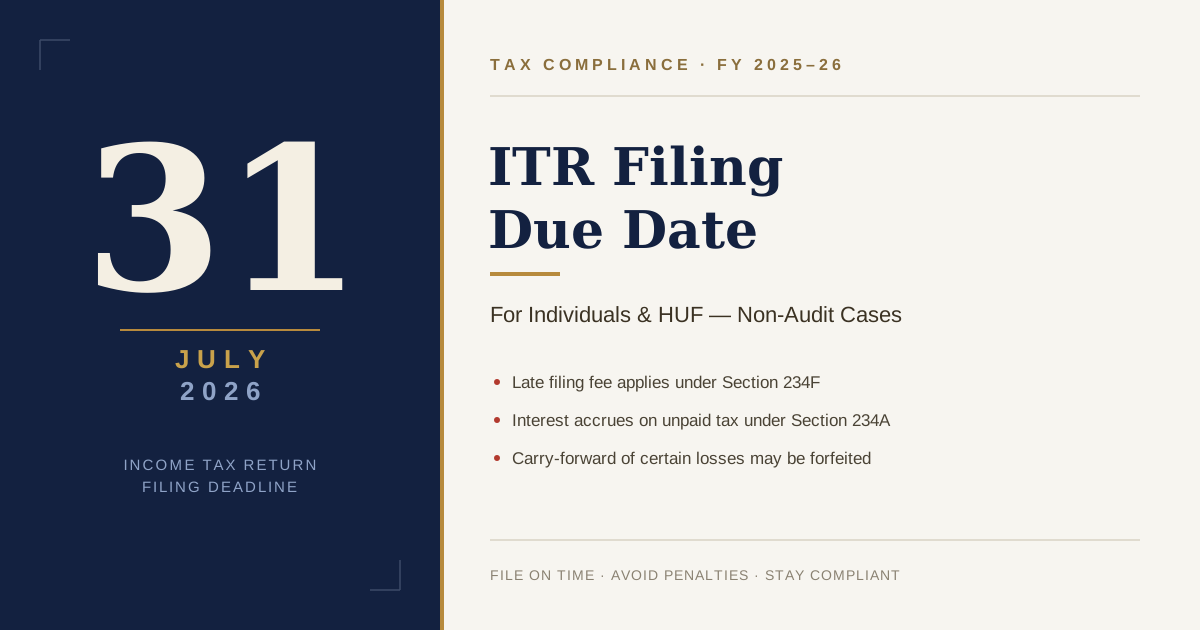
ITR Filing Due Date 2026: Everything You Need to Know Before 31st July
Filing your Income Tax Return (ITR) on time isn't just a legal formality — it protects you from penalties, interest charges, and loss of valuable tax benefits. If you're an individual or a Hindu Undivided Family (HUF) whose accounts don't require an audit, mark this date on your calendar right now:
📅 31st July 2026 — The Last Date to File Your ITR
This deadline applies to:
- Salaried individuals
- Pensioners
- HUFs not liable for tax audit
- Taxpayers not covered under transfer pricing provisions (Section 92E)
If your accounts require an audit, or if you're subject to transfer pricing regulations, a separate (later) due date applies to you.
Why You Shouldn't Wait Until the Last Minute
Every year, thousands of taxpayers rush to file their returns in the final days before the deadline — and end up facing site slowdowns, document errors, or missed deductions. Filing early gives you:
- Time to correct errors before submission
- Faster processing of refunds
- Peace of mind, without the last-minute portal rush
- Opportunity to reconcile Form 26AS, AIS, and TIS thoroughly
What Happens If You Miss the Deadline?
Missing the ITR filing due date isn't the end of the road, but it does come at a cost:
- Late Filing Fee — Under Section 234F, a fee applies for filing after the due date.
- Interest on Tax Due — Interest under Section 234A accrues on any unpaid tax liability.
- Loss of Carry-Forward Benefits — Certain losses (like capital losses or business losses) cannot be carried forward to future years if the return is filed late.
- Delayed Refunds — If you're owed a refund, late filing means a delayed payout.
- Belated Return Window — You can still file a belated return, but only up to the extended deadline allowed by the Income Tax Department, and without the benefit of carrying forward most losses.
Documents to Keep Ready Before Filing
- Form 16 (from your employer)
- Form 26AS / Annual Information Statement (AIS) / Taxpayer Information Summary (TIS)
- Bank account statements and interest certificates
- Investment proofs (for deductions under Section 80C, 80D, etc.)
- Capital gains statements (mutual funds, stocks, property)
- Aadhaar and PAN details
Quick Checklist Before You Hit Submit
- Verified income from all sources (salary, interest, capital gains, rental income)
- Claimed all eligible deductions and exemptions
- Cross-checked TDS details with Form 26AS/AIS
- Selected the correct ITR form and tax regime
- Reviewed bank account for refund credit
- E-verified the return after submission (mandatory for processing)
Other Key Compliance Dates to Watch in July 2026
While the ITR deadline is the headline date, July is a packed month for tax and GST compliance. Here's a quick snapshot:
DateCompliance
7 July
TDS/TCS Deposit for June 2026
11 July
GSTR-1 (Monthly Filers)
15 July
TDS Certificates & FLA Return
18 July
CMP-08 (Composition Dealers)
20–24 July
GSTR-3B (based on category)
30 July
TDS Challan-cum-Statement
31 July
ITR Filing (Individuals/HUF – Non-Audit)
31 July
Quarterly TDS/TCS Return (Q1)
Final Word: Don't Delay, File Today
Tax compliance doesn't have to be stressful. With your documents in order and a clear understanding of the deadline, filing your ITR before 31st July 2026 can be a quick, smooth process — and it saves you from unnecessary penalties and interest.
Need help filing your return? Reach out to our team today, and let us take the stress out of tax season for you.
Disclaimer: This blog is for informational purposes only and does not constitute professional tax advice. Please consult a qualified tax professional or refer to official Income Tax Department notifications for guidance specific to your situation. Due dates are subject to change based on government notifications.